
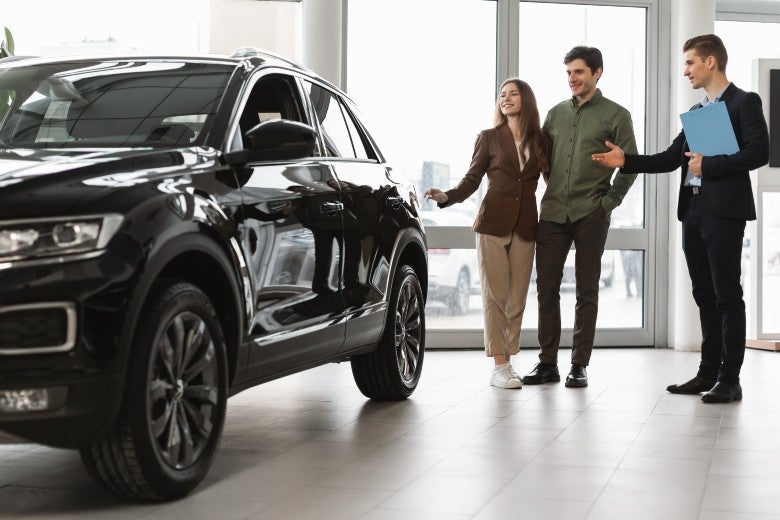
So, you're ready for another vehicle. Do you head straight for a brand-new model, or start looking at what's available on the used-car market? It's tempting to go new, especially when you see all the latest features. But before committing to a bigger price tag, take a look at what a pre-owned vehicle has to offer. In the new car vs used car debate, buying used can give you quite a bit more flexibility with your budget.
What Do You Get When You Buy New?
Let's give new cars their due. There's something nice about being the first owner. You pick the color, choose the features — and don't have to wonder whether someone else skipped an oil change or ignored a strange noise.
New vehicles also have a few practical advantages:
- Newer technology: You'll generally find the latest infotainment systems, smartphone connectivity, and driver-assistance features.
- Factory warranty coverage: Most new vehicles come with warranties that cover certain repairs during the first few years or miles.
- More control over features: Depending on availability, you can choose your preferred trim, color, and optional equipment.
- No previous ownership: You know the vehicle's history because you're starting it yourself.
Of course, there's a pretty big catch: the price. New vehicles typically cost considerably more than comparable used models. They also lose value quickly during their first few years. If you sell or trade in sooner than expected, that depreciation can take a bigger bite out of your investment than you'd like.
And don't forget about financing and insurance. A higher purchase price can mean larger loan payments and higher insurance premiums.
Why Give a Used Car a Closer Look?
Here's something worth thinking about: Do you really need a brand-new vehicle to get the features you want?
A model that's two or three years old might have heated seats, a backup camera, smartphone integration, and plenty of other conveniences. You could get many of the same features for considerably less money.
Buying used has some other advantages:
- More room in your budget: Lower purchase prices can make it easier to find a vehicle without taking on a large loan.
- Less depreciation: The first owner has already absorbed much of the initial drop in value. Your vehicle will still depreciate, but generally at a slower rate.
- Higher trim levels within reach: That SUV with leather upholstery, a sunroof, or upgraded audio might be affordable when you shop pre-owned.
- More models to choose from: You aren't limited to the current model year. You can compare different generations and equipment packages, too.
Now, used doesn't automatically mean trouble-free. Previous ownership is something you'll want to investigate before handing over your money. Mileage, maintenance, accident history, and general condition all deserve a closer look.
A few things to check: Review the vehicle history report, ask about available service records, and find out whether any factory warranty remains. An independent inspection is also a good idea — and don't skip the test drive! Pay attention to the brakes, steering, transmission, and any unusual sounds.
One more thing: Don't judge a vehicle by mileage alone. A higher-mileage car with consistent maintenance records may be a better purchase than one with fewer miles and a history of neglected upkeep.
What Should You Look for When Shopping Used?
Before browsing vehicles, think about how you'll actually use yours. There's no point paying extra for a large SUV if a smaller car handles your daily routine just fine.
A few questions can help you narrow your search:
- What's your budget? Include insurance, fuel, registration, maintenance, and possible repairs. Leave a little room for unexpected expenses.
- How much space do you need? Think about passengers, groceries, luggage, and anything else you regularly haul around.
- How much driving do you do? A long daily commute puts different demands on a vehicle than occasional trips around town.
- What will financing look like? Compare interest rates, loan terms, and down payments. Look at the overall cost, not just the monthly payment.
You may find that a slightly older model checks every box on your list. That's one of the nice things about shopping used: You have more possibilities to explore.
Shop Our Used Inventory at United Auto Sales of Utica
If you're considering a pre-owned vehicle, we'd be happy to help you look around. At United Auto Sales of Utica, our selection includes used cars, trucks, and SUVs for drivers in Yorkville NY, Utica, and nearby communities.
Take a look at our available vehicles and come see us for a test drive. You might be surprised by how much you can get without paying the price of a brand-new car!
Find a pre-owned vehicle that fits your budget.
Frequently Asked Questions About Buying New vs. Used
Is it better to buy a new car or a used car?
It depends on your priorities. A new car offers the latest technology, factory warranty coverage, and no previous ownership, but it costs more and loses value quickly. A used car usually costs less, depreciates more slowly, and can put higher trim levels within your budget.
What should I check before buying a used car?
Review the vehicle history report, ask for service records, and find out whether any factory warranty remains. An independent inspection is a good idea, and on the test drive pay attention to the brakes, steering, transmission, and any unusual sounds.
Is a higher-mileage used car a bad buy?
Not necessarily. A higher-mileage vehicle with consistent maintenance records may be a better purchase than one with fewer miles and a history of neglected upkeep, so look at the full maintenance history rather than mileage alone.
How should I budget for a used car?
Include insurance, fuel, registration, maintenance, and possible repairs, and leave room for unexpected expenses. When financing, compare interest rates, loan terms, and down payments, and look at the overall cost instead of just the monthly payment.